One of the great joys opening Ross & Jamieson Hearing Consultants in Blackhall has given me is being able to spend more time with my patients. Being able to give people time to discuss their hearing issues without feeling rushed or pressured. As every Audiologist will know, the inevitable subject of hearing in group situations or background noise will come up. Patients will describe the struggles they have in these situations and how they have to concentrate just to follow parts of conversations. “So there is a lot of listening effort?” I will respond. While the concept of listening effort is well known to audiologists it is a phrase that produces a ‘lightbulb’ moment with patients. There is a lot of listening effort when in challenging situations like a restaurant or bar….but why? And what can we do to reduce it?
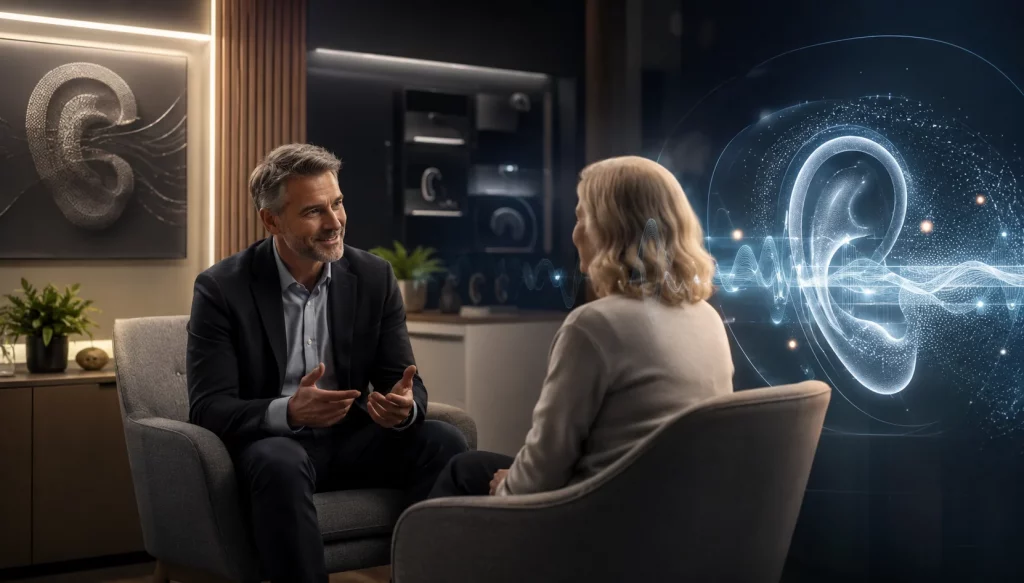
Essentially, listening effort is the cognitive energy, or brain power, needed to perceive and understand an acoustic signal such as speech. If that speech signal is interrupted due to hearing loss, the brain needs to work harder to process it. If we use sight as an analogy. When you have 20/20 vision (or normal hearing), the world around you is clear and sharp. There is no struggle to see objects close by or far away. There is no effort in seeing. If you have eyesight like mine, -6 in both eyes by the way (or hearing loss), the world is blurry and unclear. Being able to see is a struggle with a lot of squinting.
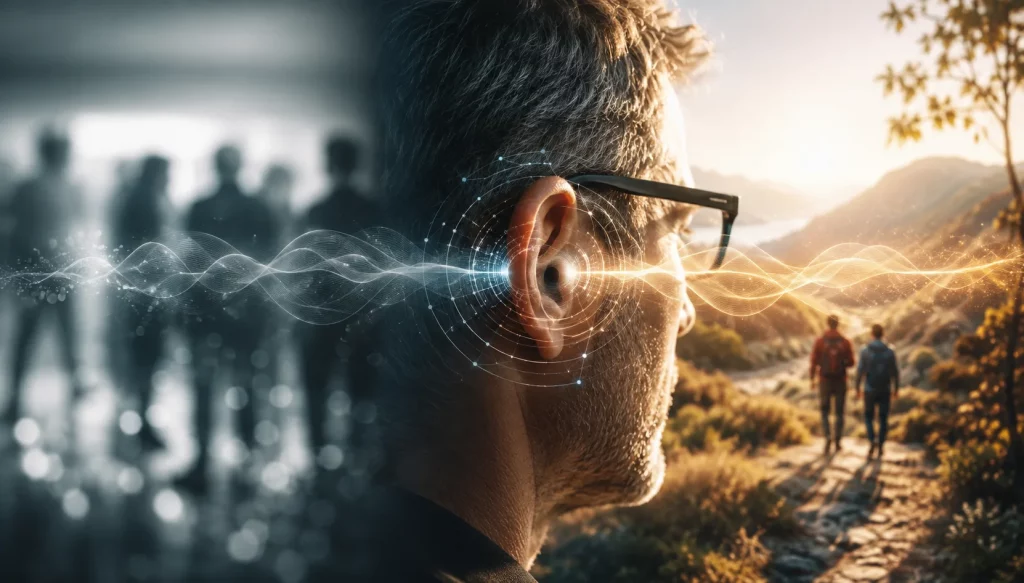
In order to fully understand why hearing loss adds to listening effort, we must first understand how it affects us. The most common type of hearing loss Audiologists will see is Presbycusis or High Hz Sensorineural Hearing Loss, where the damage occurs in the Cochlea or inner ear due to ‘wear and tear’. Patients will often struggle with ‘clarity of speech’ where it may seem like people mumble or speech is muffled. These issues with speech are always exacerbated when in background noise or group situations. This is because High Hz Hearing Loss makes it hard for us to process soft sounds such as the “s”, “th” or “f” in speech. These soft sounds are often the beginning and endings of words, hence the difficulty with clarity of speech. When you throw in ambient noise, the brain has to work much harder to filter this out and concentrate on a single speech signal. Individuals with hearing loss will also recognise the fact that they concentrate so hard trying to hear the first part of the sentence, the speaker has already moved on leading to a type of ‘snowball effect’.
So Listening Effort occurs when we have hearing loss and a challenging listening situation, leading to an increased cognitive load. But how does this translate to real life? Patients often describe being irritable and mentally tired by the end of the day. They start to actively avoid social situations (which brings its own dangers) because participating is exhausting. In short, increased listening effort can have a major effect on an individual’s life.
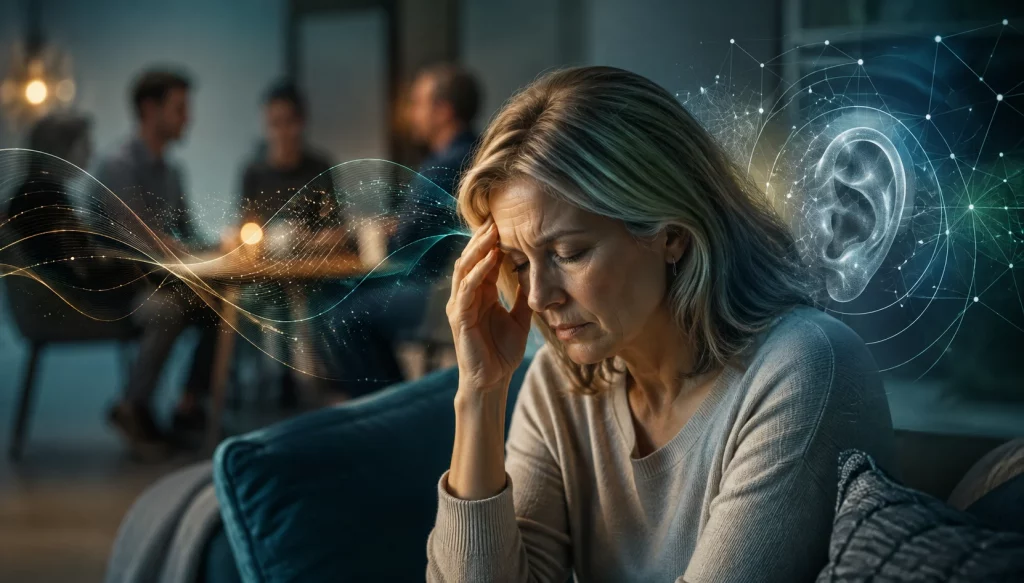
As Audiologists, how do we help our patients deal with Listening Effort? We can of course discuss coping mechanisms like being aware of facial cues and lip reading. We can advise on seating positions when in restaurants and bars. But nothing will help reduce Listening Effort in an individual with hearing loss like a set of hearing aids. Modern devices that have noise reduction, automatic programs and elements of AI. Hearing instruments that not only help with clarity of speech and following conversation in background noise, but also help lighten the ‘cognitive load’.